Fire Resistance Standards for Imported LGS Modular Buildings: A 2026 Procurement Guide
Compare LGS fire resistance standards for modular imports, verify supplier test reports, and request GFK engineering review before procurement approval.
As commercial developers increasingly turn to overseas manufacturing for Light Gauge Steel (LGS) modular buildings, ensuring compliance with stringent local building codes has become a paramount concern. Among these regulatory hurdles, fire resistance and life safety compliance stand out as the most critical risk factors in the procurement lifecycle. Failing to properly audit an overseas manufacturer’s fire compliance protocols can lead to catastrophic project delays, failed municipal inspections, and severe legal liabilities.
This 2026 procurement guide is designed specifically for buyers, procurement teams, distributors, and structural engineers who are evaluating international LGS modular suppliers. By outlining the engineering mechanics of fire-rated assemblies, comparing global testing standards, and providing a rigorous supplier auditing framework, this guide delivers the actionable intelligence needed to mitigate risk and secure high-quality, code-compliant modular assets.
Procurement CTA: If your RFQ already lists ASTM E119/UL 263, EN 13501, EN 1365, or AS 1530 requirements, send the assembly schedule to GFK Commercial for an engineering review before locking supplier pricing.
Executive Summary: The Fire Safety Paradigm in LGS Construction
When evaluating LGS modular housing, it is essential to distinguish between the combustibility of the raw materials and the fire resistance rating (FRR) of the complete structural assembly.
Core Conclusion: Light Gauge Steel is inherently non-combustible and will not contribute to the fire load of a building. However, unprotected steel will yield under severe thermal stress. Therefore, achieving localized code compliance (whether in North America, Europe, or Oceania) relies entirely on the engineered layers of passive fire protection—specifically, the sheathing, insulation, and joint sealing systems integrated during the factory assembly process.
For procurement professionals, this means that buying a "steel frame" is insufficient. You are procuring a complex, interdependent Fire-Rated Assembly.
1. The Engineering Mechanics of LGS Fire Protection
To effectively evaluate a supplier, one must first understand how LGS modular structures are designed to resist fire. In traditional timber construction, the framing itself acts as fuel. In LGS construction, the primary goal of the wall assembly is to delay the transfer of extreme heat to the structural steel studs.
The Role of Non-Combustibility
Cold-formed steel (CFS / LGS) does not burn. It will not ignite, nor will it spread flames. This fundamental characteristic drastically reduces the initial fire spread risk compared to timber-framed modular units. However, steel's yield strength degrades rapidly as temperatures exceed 400°C (752°F). If a localized fire reaches this temperature, an unprotected steel stud may buckle, leading to a localized or progressive structural collapse.
Passive Fire Protection (PFP) Systems
Tier-1 modular manufacturers engineer passive fire protection directly into the wall and floor panels. This typically involves:
- Fire-Rated Gypsum Board (Type X or Type C): These specialized boards contain glass fibers and a high percentage of bound water. When exposed to fire, the water evaporates (calcination), absorbing massive amounts of heat energy and delaying the temperature rise on the unexposed side and within the steel cavity.
- Mineral Wool Insulation: Unlike standard fiberglass or combustible foam insulations (like standard EPS/XPS), high-density rock wool or mineral wool is non-combustible and acts as an exceptional thermal barrier within the wall cavity.
- Intumescent Firestopping: Strategic application of intumescent sealants around penetrations (plumbing, electrical conduits) and modular joints prevents superheated gases and smoke from bypassing the fire-rated barriers.
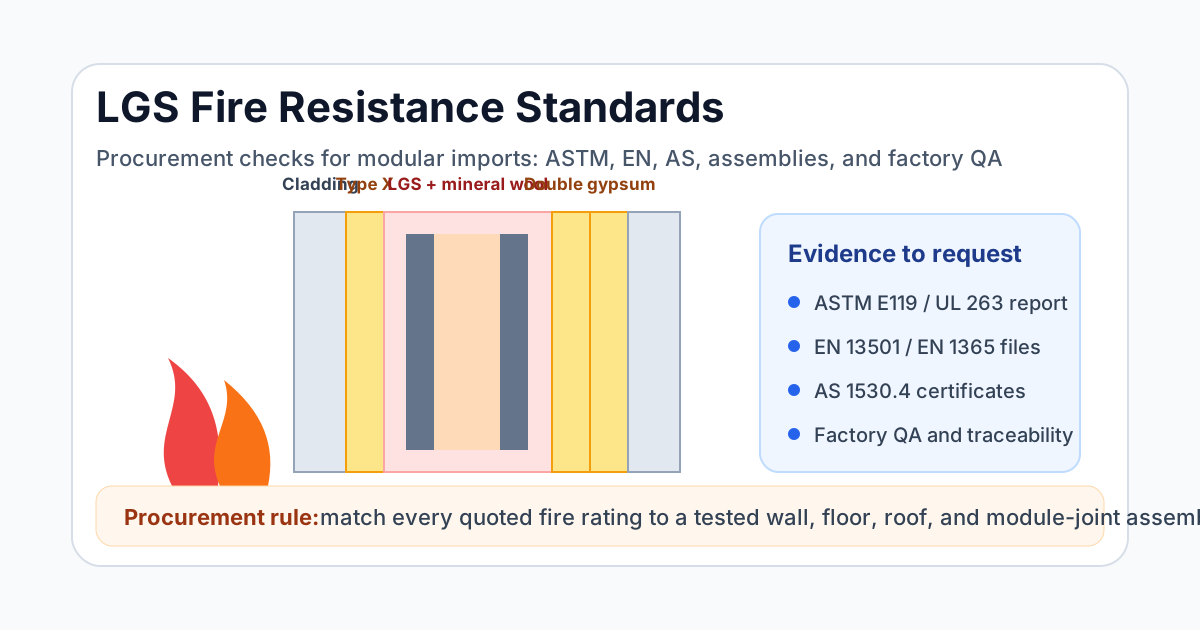
Visualizing a Standard 2-Hour Fire-Rated LGS Assembly
Below is an engineered representation of a typical multi-layer wall assembly designed to achieve a 2-hour Fire Resistance Rating (FRR), a common requirement for multi-family residential or commercial modular structures.
2. Global Fire Resistance Standards: A Comparative Analysis
Because building codes vary significantly by jurisdiction, an LGS assembly that passes testing in China or Southeast Asia may not necessarily comply with the specific localized testing methodologies required in the United States, Australia, or the European Union.
Procurement teams must demand explicit documentation tying the factory's wall assemblies to the destination country's established testing protocols.
Table 1: Cross-Jurisdictional Fire Testing Standards for LGS Assemblies
| Region / Market | Primary Testing Standard | Focus & Methodology | Required Documentation for Importers |
|---|---|---|---|
| United States & North America | ASTM E119 / UL 263 | Evaluates the duration an assembly can contain a fire and retain structural integrity under a superimposed load. Often includes a severe "hose stream" test to simulate firefighter intervention. | UL Directory Listing (e.g., Design No. U419) or specific ICC-ES Evaluation Reports for the assembly. |
| European Union (CE Marking) | EN 13501-1, EN 13501-2 & EN 1365-1 | Classification based on Reaction to Fire (combustibility, smoke, flaming droplets), Resistance to Fire classifications, and load-bearing wall fire tests. | Declaration of Performance (DoP) backed by Notified Body test reports confirming REI classifications (e.g., REI 60, REI 120). |
| Australia & New Zealand | AS 1530.1 & AS 1530.4 | Defines non-combustibility of materials (1530.1) and fire resistance of elements of construction under specific time-temperature curves (1530.4). | NATA-accredited laboratory test certificates or a comprehensive Fire Engineering Report (FER) by a registered certifier. |
| United Kingdom | BS 476 (Legacy) / EN 13501 | Similar to EU standards, but often requires specific third-party accreditation (e.g., BOPAS or NHBC approvals) for residential modular warranty coverage. | UKAS-accredited fire test reports and structural warranties acknowledging the specific LGS fire detailing. |
| International (General) | ISO 834 | The foundational standard outlining the standard fire-test curve. Many national codes are derived from or cross-reference ISO 834. | Baseline laboratory reports, though localized translation/certification is usually required by municipal inspectors. |
Procurement Caution: Never accept a generic "fireproof" claim. If a supplier states their wall is "2-hour fire-rated," your immediate question must be: "Tested in accordance with which specific standard, and by which independent laboratory?"
3. The 2026 Procurement Checklist for Fire-Rated Modular Sourcing
Auditing a supplier requires moving beyond marketing brochures and digging into their engineering data, supply chain transparency, and factory floor quality assurance protocols. Use this detailed checklist when qualifying a new overseas manufacturer.
Phase 1: Engineering and Design Validation
- Assembly Detailing: Does the supplier provide detailed cross-sectional drawings of all wall, floor, and roof assemblies, explicitly identifying the thickness and specifications of every layer (cladding, membranes, insulation, gypsum, steel)?
- Standard Alignment: Do the provided engineering drawings explicitly reference the target market's testing standards (e.g., "Designed to meet UL 263 1-Hr FRR")?
- BIM Integration: Are fire-stopping details (e.g., intumescent blocks around service penetrations) modeled directly into the 3D BIM software (such as Vertex BD or FrameCAD) to ensure precision during assembly?
- Structural Loading Context: Are the fire tests conducted on load-bearing assemblies? A non-load-bearing wall passing a fire test does not guarantee the same wall will survive when supporting a multi-story load during a fire.
Phase 2: Material Supply Chain Auditing
- Gypsum Board Verification: Can the factory prove they are sourcing authentic Type X or Type C fire-rated drywall from reputable international brands (e.g., USG Boral, Knauf, CertainTeed), rather than substandard, non-certified alternatives?
- Insulation Combustibility: Is the cavity insulation certified as non-combustible (e.g., mineral wool/rock wool)? Are they avoiding highly combustible EPS/XPS foam within the structural cavity unless specifically engineered and tested in an approved assembly?
- Intumescent Materials: Do they use certified intumescent sealants and fire collars for all plumbing and electrical penetrations that cross fire-rated partitions?
- Material Traceability: Do they maintain strict batch records linking the materials used on the factory floor directly to their original mill test certificates and safety data sheets?
Phase 3: Factory QA and Installation Protocols
- Fastening Precision: Fire-rated gypsum must be fastened at specific intervals to prevent warping and failure during a fire. Does the factory have a documented QA process verifying screw spacing and depth according to the fire test specifications?
- Module Connections: In volumetric modular construction, the joints between the modules are the most critical weak points for fire spread. Has the manufacturer engineered and tested a reliable, fool-proof intumescent sealing method for the module-to-module connections that happen on-site?
- Inspection Reports: Will the factory allow third-party inspection agencies (e.g., SGS, TÜV, or a localized inspector) to conduct random audits of the enclosed wall cavities before the modules are sealed and shipped?
Table 2: LGS Fire-Rated Assembly Procurement Decision Matrix
To streamline your supplier qualification, use this decision matrix evaluating specification requirements, common failure risks, and the exact questions to ask during supplier communication.
| Decision Dimension | Specification Requirement (Buyer Decision) | Potential Failure Risk | Supplier Verification Question |
|---|---|---|---|
| Gypsum Sheathing | Type X or Type C fire-rated boards, typically 15.9mm (5/8") thick, multi-layered for >1hr ratings. | Use of non-certified or standard drywall; micro-cracks during transit ruining fire integrity. | "Can you provide the mill test certificates for the exact batch of Type X gypsum used in our project?" |
| Cavity Insulation | High-density Mineral Wool / Rockwool (non-combustible). | Use of combustible EPS/XPS foam without approved thermal barriers, acting as hidden fuel. | "Is the cavity insulation certified as non-combustible under ASTM E136 or ISO 1182?" |
| Steel Framework | Minimum G550 yield strength; Z275/AZ150 coating for corrosion resistance. | Steel buckling below 400°C due to inadequate passive protection or substandard gauge thickness. | "Are your LGS framing tests conducted on load-bearing assemblies under superimposed loads?" |
| Penetration Firestops | Intumescent sealants and fire collars at all MEP (Mechanical, Electrical, Plumbing) penetrations. | Toxic smoke and superheated gas bypassing the fire-rated barrier through unsealed pipe gaps. | "Which brand of intumescent sealant is modeled into your BIM software for MEP penetrations?" |
| Module Connection (Marriage Walls) | Site-applied intumescent strips or tested fire-rated foams between 3D volumetric modules. | The interstitial space acting as a chimney during a fire event if not properly detailed. | "Do you provide comprehensive marriage wall sealing details tested for our specific target market?" |
| Exterior Cladding System | Non-combustible facades (e.g., fiber cement, metal panels, or masonry). | Combustible external cladding igniting and bypassing the internal LGS fire-rated assembly. | "Does the complete exterior envelope (including cladding and weather barriers) meet NFPA 285 or local equivalents?" |
| Fastening & Assembly QA | Specific screw spacing, depth, and staggered joint patterns per the fire test assembly design. | Gypsum board warping, detaching, and failing prematurely due to improper screw placement. | "How does your QA team document and verify screw spacing against the fire test specifications?" |
4. Application Boundaries and Critical Risk Factors
Even with the highest quality manufacturing, developers must understand the boundaries and limitations of LGS modular fire compliance. The following are the most common points of failure in imported modular systems.
The "Module-to-Module" Vulnerability
In fully volumetric modular construction (where complete 3D rooms are shipped), the internal walls are thoroughly inspected in the factory. However, the spaces between the modules once stacked on-site—often called the "interstitial space" or "marriage wall"—can act as a chimney during a fire if not properly sealed.
- The Solution: Procurement teams must ensure the manufacturer provides comprehensive marriage wall detailing and on-site joining instructions, utilizing intumescent strips or fire-rated expanding foams specifically tested for these dynamic joints. It is critical that the supplier does not leave this detail "to be figured out on site."
External Facade Combustibility
Following major global cladding fire incidents, regulatory scrutiny on exterior facades is at an all-time high. Even if the internal LGS core assembly is non-combustible and achieves a 2-hour FRR, applying a combustible external cladding (like certain Aluminum Composite Panels or untreated timber composites) can completely invalidate the building's compliance and insurance coverage.
- The Solution: Ensure the complete exterior envelope, not just the structural frame, is evaluated as a single system. Non-combustible fiber cement boards, metal cladding, or masonry veneers should be prioritized.
Transport Damage and Structural Micro-Fractures
Micro-cracks in fire-rated gypsum board sustained during ocean freight or road transport can severely compromise the fire rating of a wall. The core strength of Type X gypsum lies in its monolithic structure holding the water content; if cracked, heat penetrates rapidly.
- The Solution: LGS frames are highly rigid, which minimizes flexing during lifting. However, buyers should mandate robust transport bracing and specify impact-resistant gypsum (which often doubles as fire-rated) for the innermost layers of volumetric units. Pre-shipping inspections must specifically look for hairline cracks in the sheathing.
Substandard Substitutions
A common risk with unverified overseas factories is the "bait and switch"—passing initial audits with premium materials but substituting cheaper, non-certified insulation or gypsum during mass production.
- The Solution: Implement unannounced third-party factory inspections during the production run, specifically pulling random samples of the insulation and sheathing for material verification against the original approved bill of materials.
5. Summary and Next Steps for Developers
Navigating fire resistance standards is not merely a bureaucratic checklist—it is the foundation of building a safe, insurable, and legally compliant commercial structure. When sourcing LGS modular buildings internationally, developers must shift from evaluating "price per square meter" to evaluating "compliance per assembly."
By demanding specific testing documentation (ASTM, EN, AS), verifying the raw material supply chain (authentic Type X gypsum and mineral wool), and rigorously auditing the factory's QA processes, procurement teams can successfully leverage the immense speed and cost benefits of overseas LGS manufacturing without compromising on safety or compliance.
Secure Your Project with GFK Commercial
At GFK Commercial, we engineer our Light Gauge Steel modular systems with global compliance at the forefront. Our design teams utilize advanced BIM technology to detail every fire-rated assembly, and our manufacturing facilities employ rigorous QA protocols to ensure the materials installed match the materials tested.
Whether you require a 1-hour rated residential development or a 2-hour rated multi-story commercial complex, we provide the traceable documentation and precision engineering required to satisfy your local building inspectors.
Contact the GFK Commercial Engineering Team today to review your architectural plans, discuss localized fire compliance, and request a detailed OEM manufacturing proposal.
Related GFK Procurement Resources
- LGS technology overview - review the structural role of cold-formed steel before comparing fire-rated assemblies.
- Commercial buyer guide - align supplier qualification, documentation, and inspection scope before RFQ release.
- Compliance planning - map destination-market code evidence before production and shipment.
Sources & References
- International Code Council (ICC): Passive Fire Protection in the International Building Code, Part 2 - North American fire-resistance testing context, including ASTM E119 and UL 263 references.
- BSI: BS EN 13501 fire classification standards series - European reaction-to-fire and resistance-to-fire classification family used for construction products and building elements.
- CEN catalogue via ITeh Standards: EN 1365-1:2012 Fire resistance tests for loadbearing elements - Walls - Load-bearing wall test reference for the EU procurement row.
- Standards Australia: AS 1530.4-2014 catalogue page - Fire-resistance tests of elements of construction used in Australian compliance evidence.
- Steel Framing Industry Association (SFIA): Cold-formed steel framing resources - Industry guidance relevant to fire and acoustic resistance assemblies.
Author

More Posts

How to Evaluate an Overseas LGS Modular Manufacturer: A 2026 Procurement Checklist
A comprehensive guide for developers and procurement teams on auditing Light Gauge Steel (LGS) modular suppliers. Covers ISO standards, CNC automation, steel grades, and QA.
Australia Modular Housing Market Update (Week 16, 2026): Approval Pathways, Transport Rules, and NCC 2025 Readiness
A decision-focused market update for expandable homes, transportable accommodation, granny flats, and modular delivery in Australia, checked on 17 April 2026.
Australia Modular Housing Market Update (Week 17, 2026): NSW Assessment Guidance, NHVR Access Settings, and Buyer Cost Signals
Decision-focused update for 22 April 2026: NSW guidance changes, NHVR notice settings, and cost/dispatch implications for expandable homes and transportable accommodation buyers.